
Eight Precision Compounds.
One Delivery System.
Each VitalPep Pro FlexPen delivers a rigorously tested research compound in a precision-engineered 3ml reusable pen — manufactured to pharmaceutical standards and independently verified for purity.
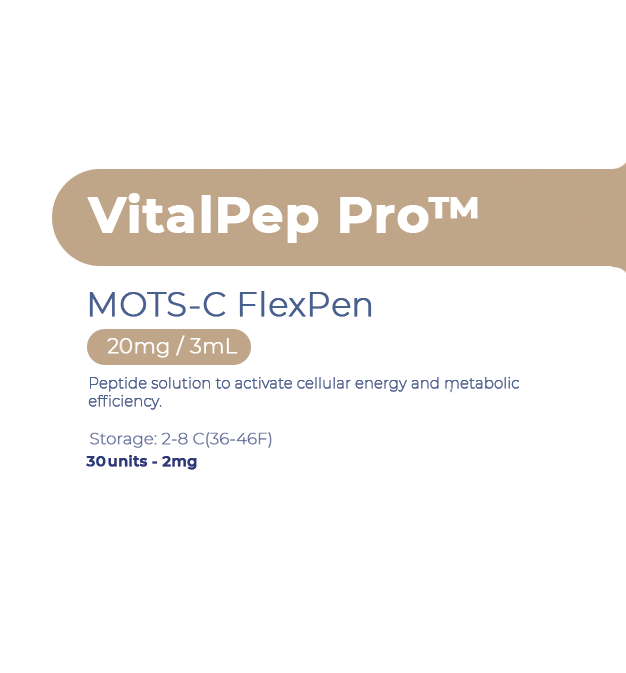
MOTS-C FlexPen
MRWQEMGYIFYPRKLR (16-amino acid mtDNA-encoded mitokine)
16-amino acid mitochondrial-derived peptide (sequence: MRWQEMGYIFYPRKLR) encoded by mtDNA. Acts as a mitokine that regulates metabolic homeostasis, energy balance, and cellular stress responses, primarily targeting skeletal muscle.
Activates AMPK (energy sensor) → ↑ glucose uptake, fatty acid oxidation, insulin sensitivity, and mitochondrial function. Under metabolic stress: translocates to nucleus (AMPK-dependent) to regulate protective gene expression. Inhibits folate-purine biosynthesis pathway, elevating AICAR to further boost AMPK. Additional targets: binds/activates CK2 in muscle (tissue-specific) and modulates mTORC1 in immune cells.
- Improves insulin sensitivity & glucose metabolism
- Enhances fat burning & reduces visceral fat
- Boosts cellular energy & mitochondrial function
- Increases endurance & exercise performance
- Promotes anti-aging & longevity
- Reduces inflammation
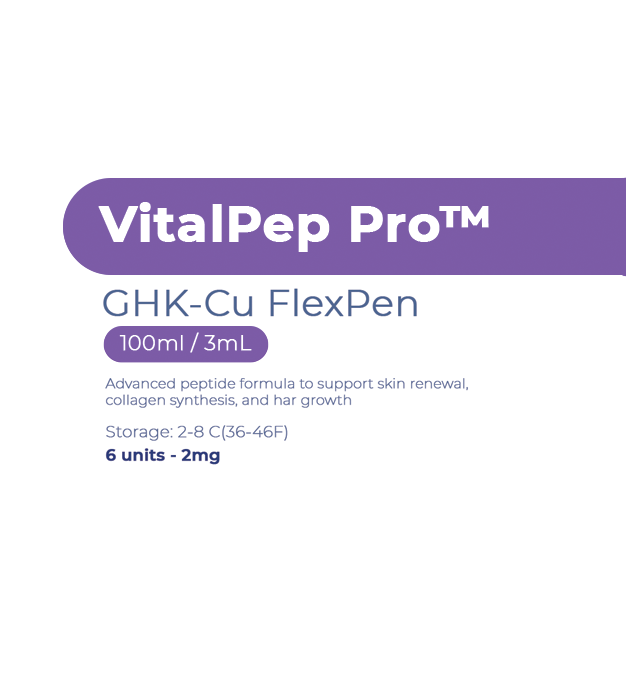
GHK-Cu FlexPen
Glycine-Histidine-Lysine Copper Peptide · 33.33 mg/ml · 100mg / 3ml
GHK-Cu is a naturally occurring copper peptide complex found in human plasma that plays a critical role in wound healing, tissue remodeling, and cellular repair. Originally isolated by Dr. Loren Pickart, plasma GHK-Cu levels decline sharply with age — making it one of the most studied peptides in regenerative and anti-aging research. Each FlexPen delivers a precision 100mg payload in 3ml of carrier solution, providing consistent, measurable dosing for research protocols.
GHK-Cu binds and transports copper ions into cells, modulating the expression of over 4,000 human genes. It activates collagen and elastin synthesis via TGF-β pathway stimulation, promotes angiogenesis through VEGF upregulation, and exerts antioxidant activity by activating superoxide dismutase. At the nuclear level, it acts as a gene-regulating signal that resets cells toward a healthier, more youthful expression profile.
- Wound healing & tissue repair mechanisms
- Collagen & elastin synthesis pathways
- Hair follicle cycle & growth studies
- Angiogenesis & VEGF pathway research
- Antioxidant & anti-inflammatory models
- Nerve tissue regeneration & neuroprotection
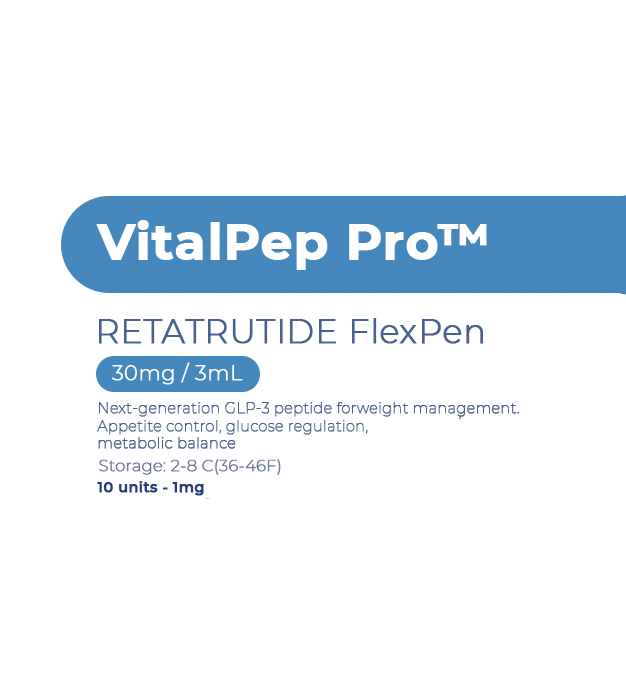
Retatrutide FlexPen
GIP / GLP-1 / Glucagon Triple Receptor Agonist · 10 mg/ml · 30mg / 3ml
Retatrutide (LY3437943) represents the cutting edge of metabolic research compounds — a novel triple agonist that simultaneously activates GIP, GLP-1, and glucagon receptors. This triple-action mechanism produces unmatched metabolic effects compared to single or dual agonists, making it the most studied next-generation compound in metabolic science. Each FlexPen delivers a precision 30mg payload for consistent, protocol-ready research dosing.
GIP receptor activation enhances insulin sensitivity and facilitates fat cell metabolism. GLP-1 receptor activation reduces appetite signaling, slows gastric emptying, and stimulates insulin secretion. Glucagon receptor activation increases hepatic glucose output, raises basal metabolic rate, and promotes lipolysis — creating a synergistic metabolic effect that exceeds dual-agonist approaches.
- Advanced obesity & body composition research
- Glucose homeostasis & insulin sensitivity
- Hepatic steatosis mechanism studies
- Cardiovascular metabolic risk research
- Energy expenditure pathway investigation
- Comparative studies vs. GLP-1 monotherapy
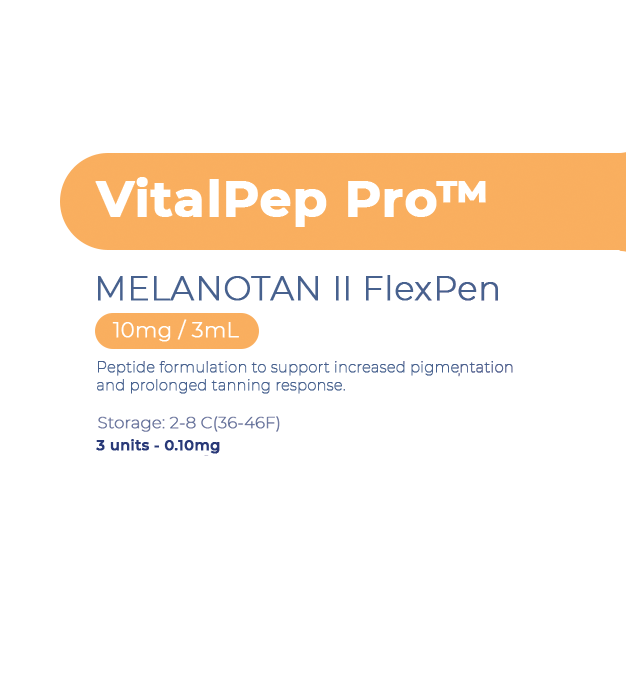
Melanotan II FlexPen
Synthetic α-MSH Cyclic Lactam Analog · 3.33 mg/ml · 10mg / 3ml
Melanotan II (MT-II) is a synthetic cyclic lactam analog of alpha-melanocyte-stimulating hormone (α-MSH), originally developed at the University of Arizona as part of research into photoprotection and tanning. As a non-selective melanocortin receptor agonist, MT-II provides unparalleled access to the melanocortin system for studying pigmentation, appetite regulation, sexual function, and immune modulation pathways in a single compound.
MT-II binds with high affinity to melanocortin receptors: MC1R in melanocytes drives eumelanin production and photoprotection; MC3R regulates energy homeostasis and immune function; MC4R activation controls appetite suppression, libido pathways, and thermogenesis; MC5R plays a role in exocrine gland function. This multi-receptor profile makes MT-II a uniquely versatile research tool across multiple biological systems.
- Melanogenesis & pigmentation pathway studies
- MC4R appetite regulation research
- Sexual function & libido pathway studies
- Photoprotection & UV response models
- Energy homeostasis & thermogenesis
- Immune modulation & anti-inflammatory research
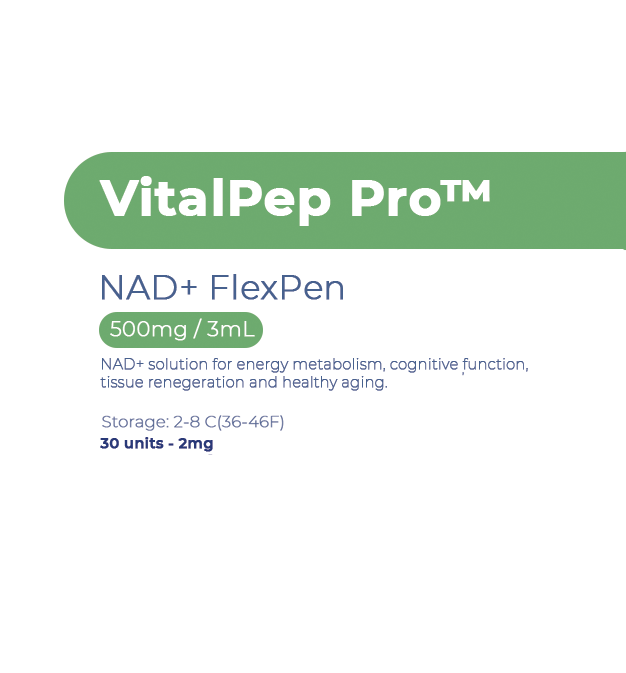
NAD+ FlexPen
Nicotinamide Adenine Dinucleotide · 166.67 mg/ml · 500mg / 3ml
NAD+ (Nicotinamide Adenine Dinucleotide) is the essential coenzyme found at the center of cellular metabolism in every living cell. As a critical electron carrier in oxidative phosphorylation and a key substrate for longevity-regulating enzymes, NAD+ sits at the intersection of aging, energy production, and DNA repair research. At 500mg per 3ml cartridge, this FlexPen delivers the highest-concentration research payload in our entire lineup.
NAD+ serves as the primary substrate for sirtuins (SIRT1–7) — the master longevity deacetylases regulating gene expression, mitochondrial biogenesis, and stress resistance. It is required by PARP enzymes for DNA damage surveillance and repair. As an electron shuttle in the mitochondrial electron transport chain, NAD+ directly drives ATP synthesis. Age-related NAD+ depletion is mediated by CD38 and inflammatory SARP activity.
- Sirtuin pathway activation & longevity research
- DNA damage surveillance & repair (PARP)
- Mitochondrial function & biogenesis studies
- Neuroprotection & cognitive function models
- Muscle metabolism & exercise physiology
- Metabolic disease & aging pathway investigation
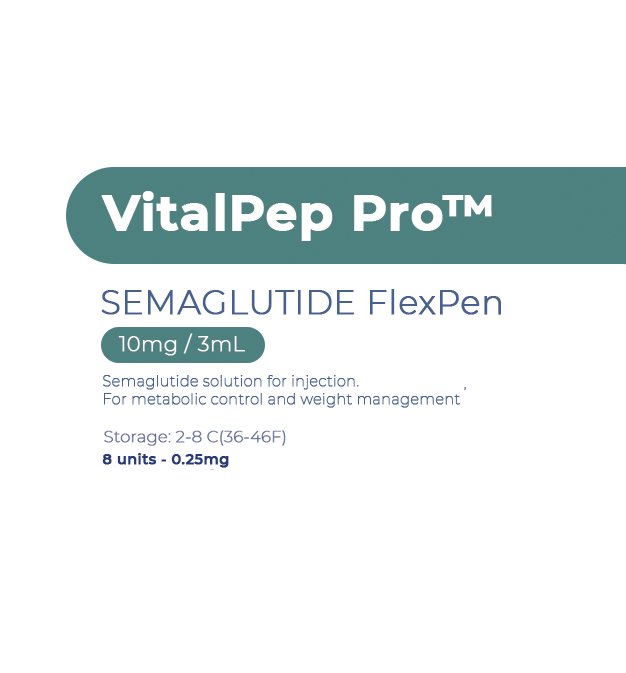
Semaglutide FlexPen
GLP-1 Receptor Agonist · 3.33 mg/ml · 10mg / 3ml
Semaglutide is a glucagon-like peptide-1 (GLP-1) receptor agonist developed as a once-weekly research compound for metabolic and weight management studies. As a long-acting GLP-1 analog with 94% homology to native GLP-1, semaglutide provides sustained receptor activation that has made it one of the most studied metabolic compounds of the past decade. Each FlexPen delivers 10mg in 3ml for precise weekly dosing protocols.
Semaglutide binds and activates GLP-1 receptors in the pancreas, hypothalamus, and gut. Pancreatic activation stimulates glucose-dependent insulin secretion and suppresses glucagon release. Hypothalamic activation reduces appetite and caloric intake. Gastric effects slow emptying and improve postprandial glucose control. Its fatty acid side chain enables albumin binding, extending half-life to approximately 7 days for once-weekly administration.
- GLP-1 receptor signaling & pancreatic beta-cell studies
- Appetite regulation & hypothalamic pathway research
- Weight management & adipose tissue investigation
- Glucose homeostasis & insulin secretion models
- Cardiovascular risk & atherosclerosis research
- Gastric motility & gut hormone interaction studies
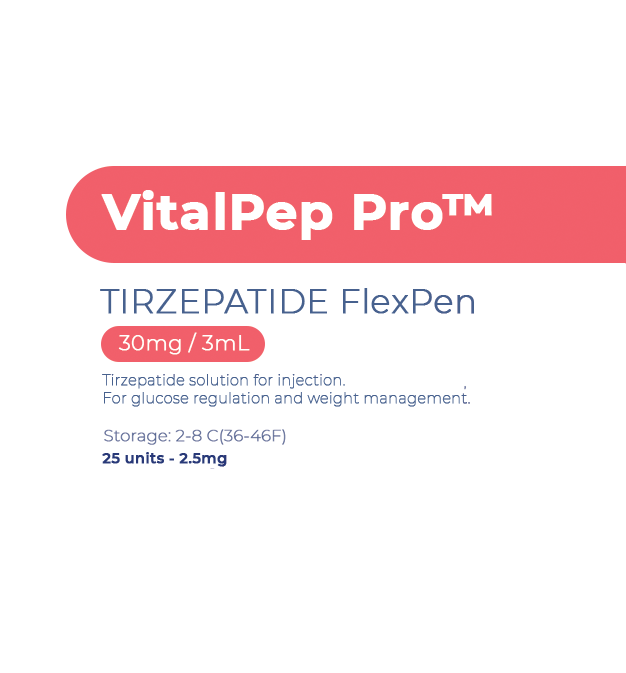
Tirzepatide FlexPen
GIP / GLP-1 Dual Receptor Agonist · 10 mg/ml · 30mg / 3ml
Tirzepatide is a novel dual glucose-dependent insulinotropic polypeptide (GIP) and GLP-1 receptor agonist — the first in a new class of twincretin compounds. By simultaneously activating both incretin receptors, tirzepatide produces metabolic effects that consistently exceed those of GLP-1 monotherapy in clinical research. Each FlexPen delivers 30mg in 3ml for precise once-weekly dosing protocols.
Tirzepatide activates both GIP and GLP-1 receptors with balanced affinity. GIP receptor activation in adipose tissue enhances insulin-stimulated glucose uptake and modulates fat storage; in the pancreas it potentiates insulin secretion. GLP-1 receptor activation suppresses glucagon, slows gastric emptying, and reduces appetite. The combination produces synergistic effects on body weight, glucose control, and lipid metabolism that neither receptor alone can achieve.
- Dual incretin receptor signaling research
- GIP receptor biology & adipose tissue studies
- Superior weight loss vs. GLP-1 monotherapy models
- Insulin sensitivity & glucose metabolism research
- Cardiovascular & lipid metabolism investigation
- Twincretin mechanism & synergy studies
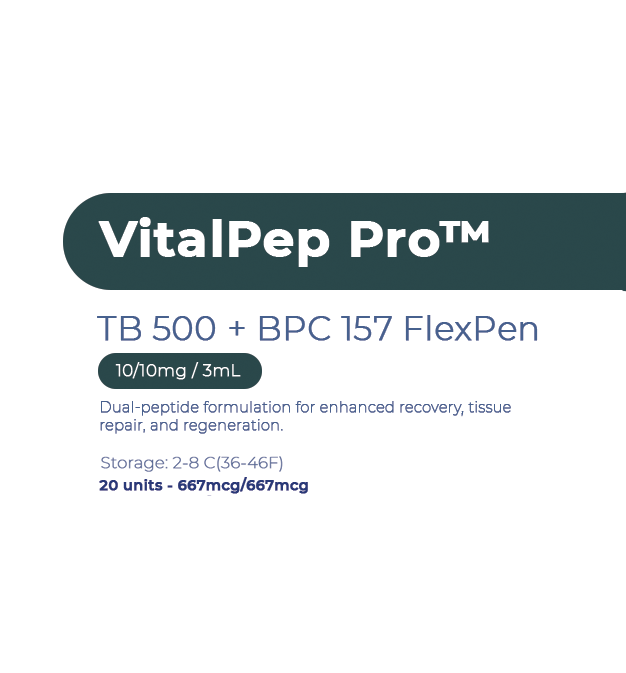
BPC-157 + TB-500 Blend FlexPen
BPC-157 10mg + TB-500 10mg Synergistic Blend · 6.67 mg/ml · 20mg total / 3ml
The BPC-157 + TB-500 Blend combines two of the most studied tissue-repair peptides into a single synergistic FlexPen formulation. BPC-157 (Body Protection Compound-157) is a 15-amino-acid gastric pentadecapeptide that accelerates wound healing, tendon repair, and gut mucosal recovery. TB-500 (Thymosin Beta-4 fragment) is a 43-amino-acid peptide that promotes cell migration, angiogenesis, and anti-inflammatory signaling. Together, these peptides target overlapping but complementary repair pathways, delivering a combined 20mg payload (10mg each) in 3ml of carrier solution.
BPC-157 upregulates growth hormone receptors, stimulates nitric oxide synthesis, and activates the FAK-paxillin pathway to accelerate tendon-to-bone healing and angiogenesis. It also modulates the dopaminergic and serotonergic systems for neuroprotective effects. TB-500 sequesters G-actin monomers to promote actin polymerization and cell migration at injury sites. It reduces NF-κB-mediated inflammation and upregulates anti-inflammatory cytokines. The combination produces synergistic tissue repair by simultaneously promoting vascularization (BPC-157) and cellular migration to wound sites (TB-500).
- Tendon, ligament & joint repair research
- Wound healing & angiogenesis studies
- Gut mucosal integrity & GI repair models
- Anti-inflammatory & NF-κB pathway research
- Muscle tissue regeneration & fibrosis studies
- Neuroprotection & nerve injury repair models